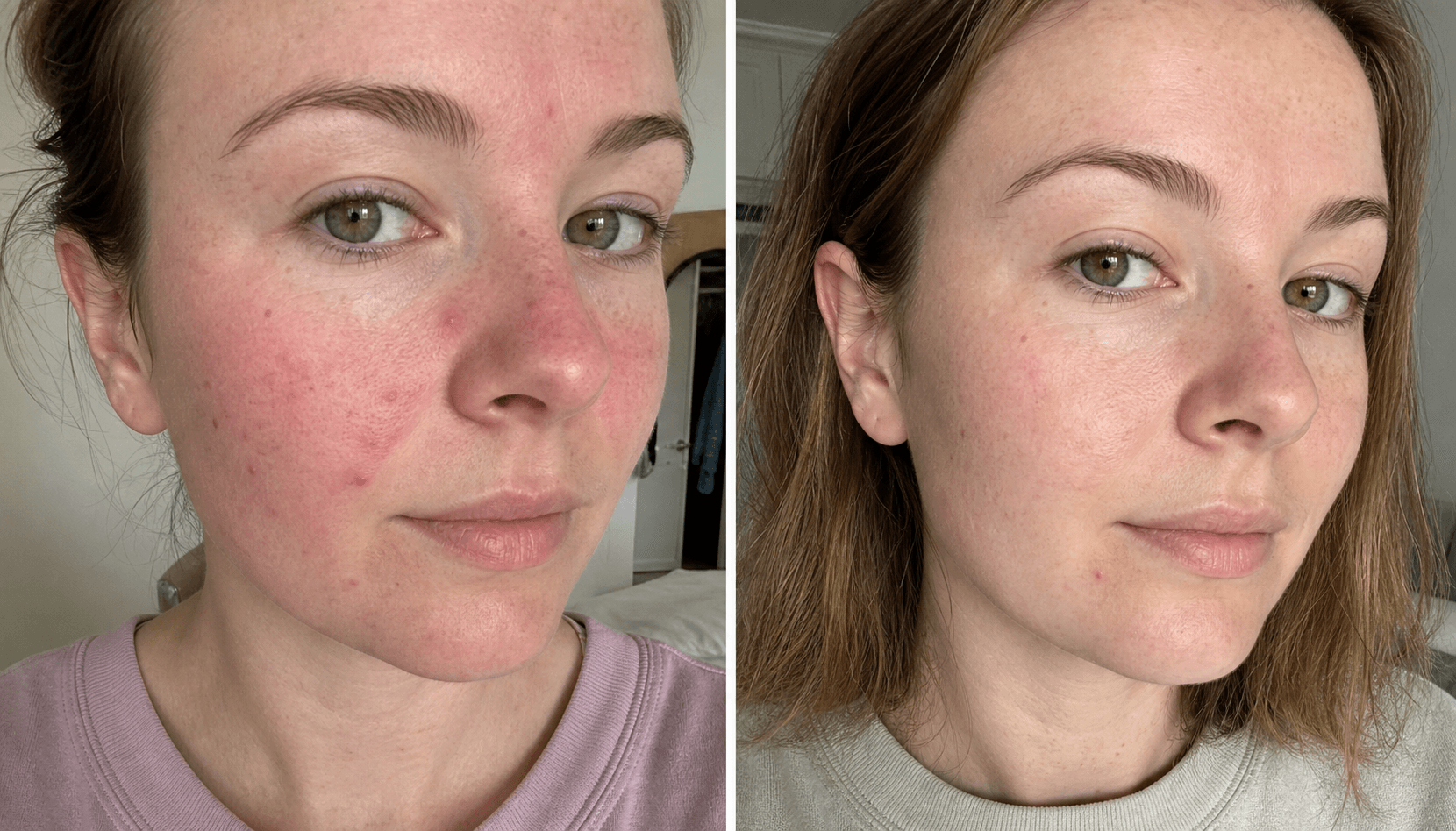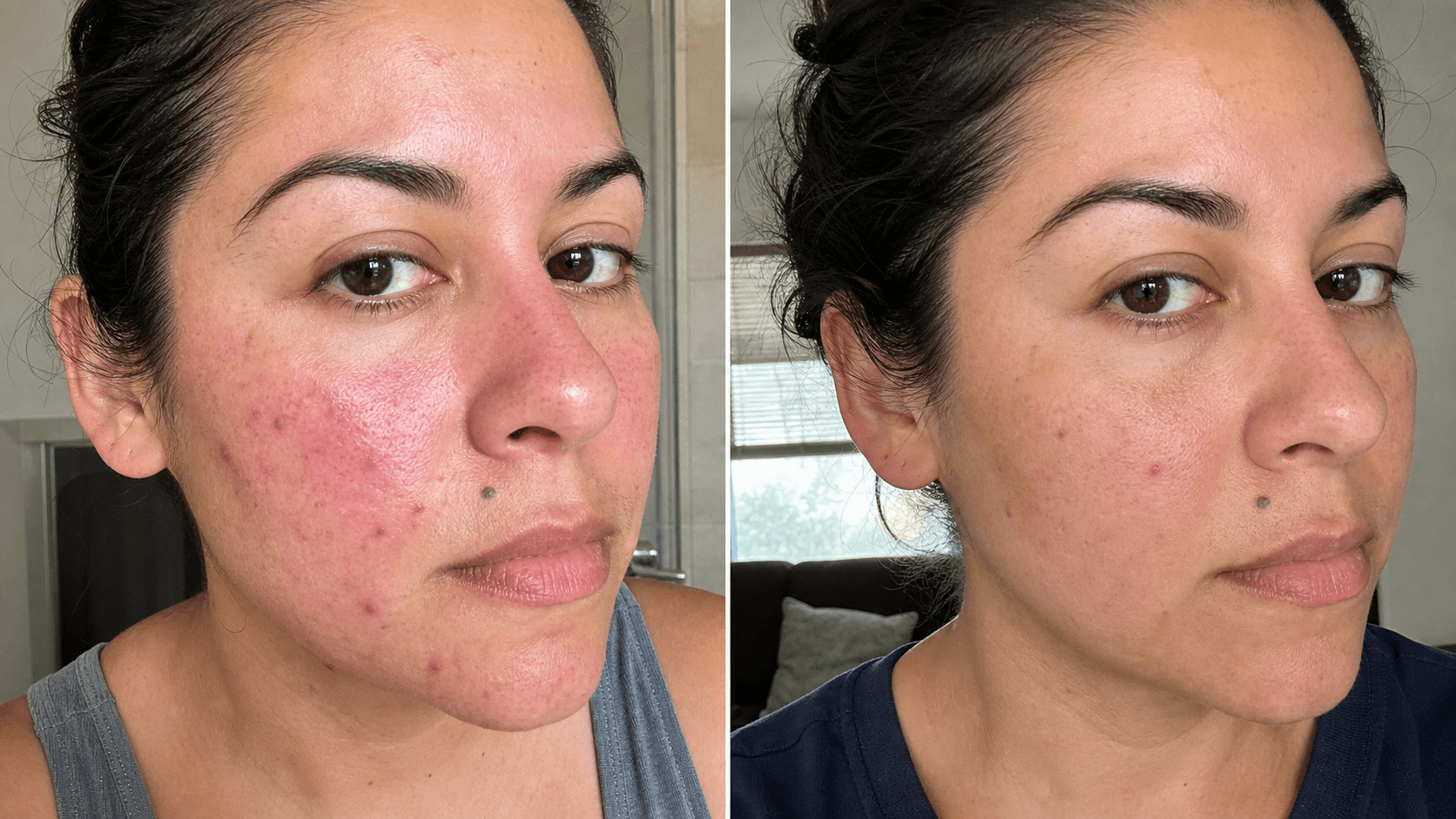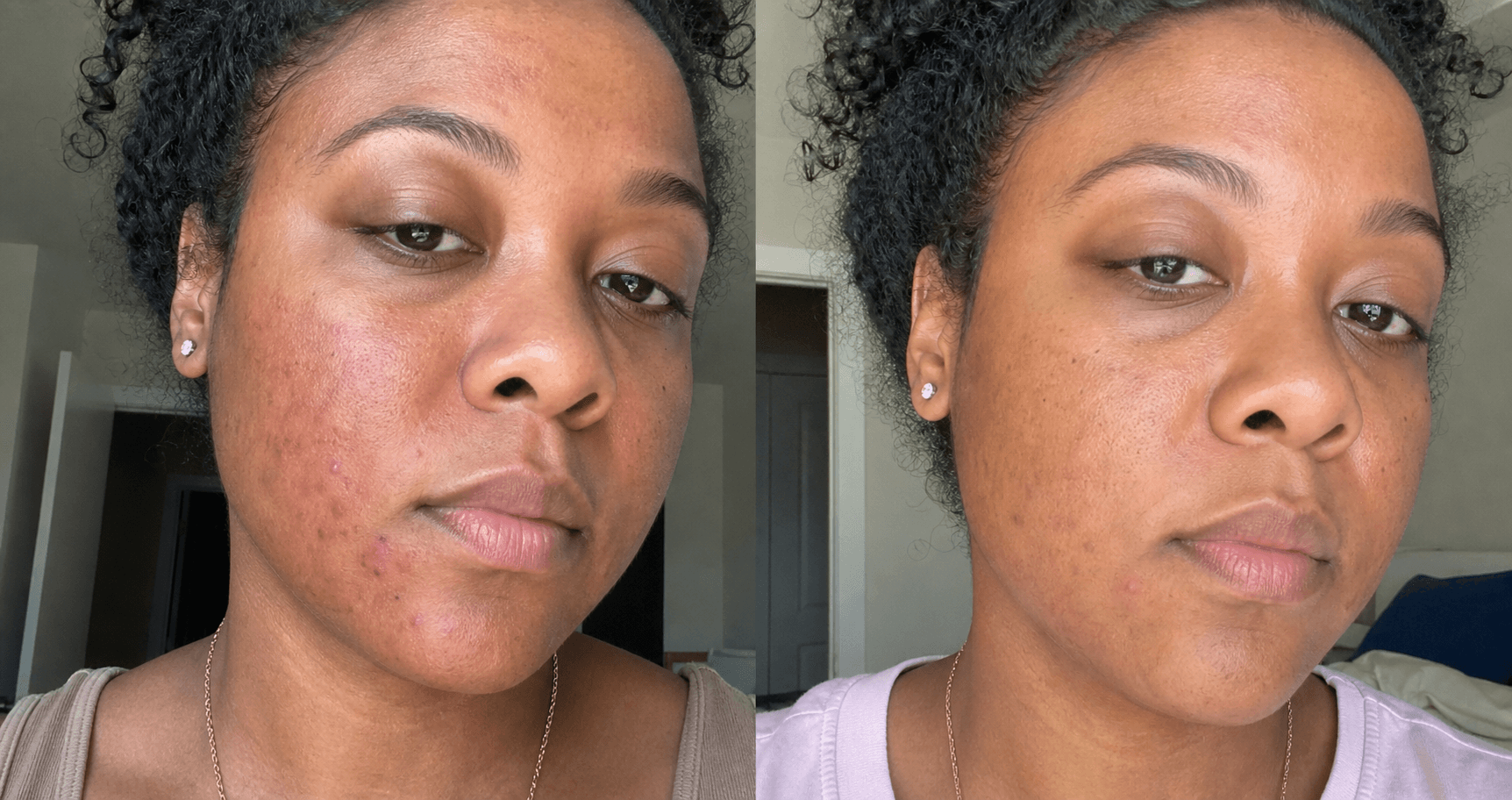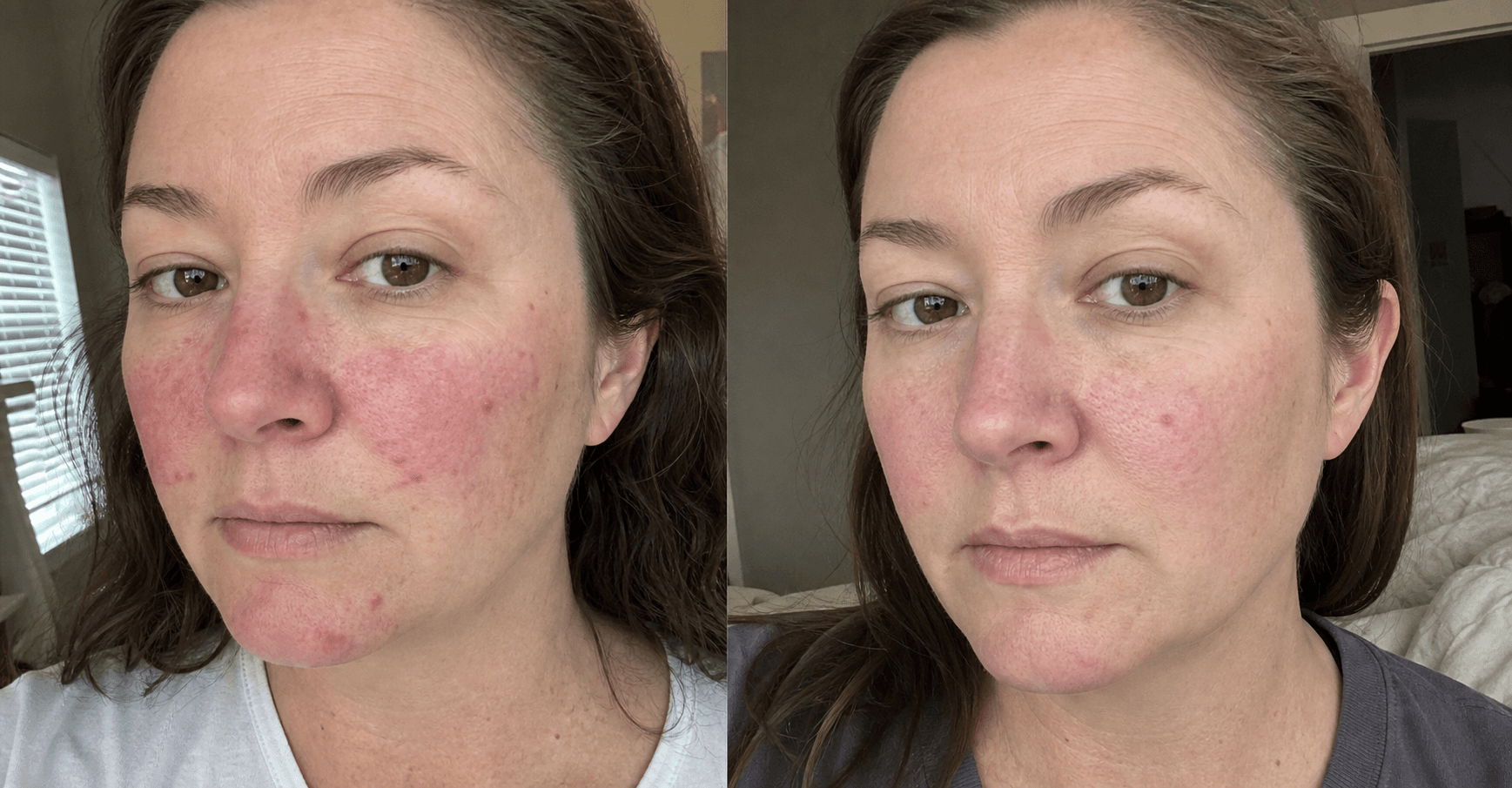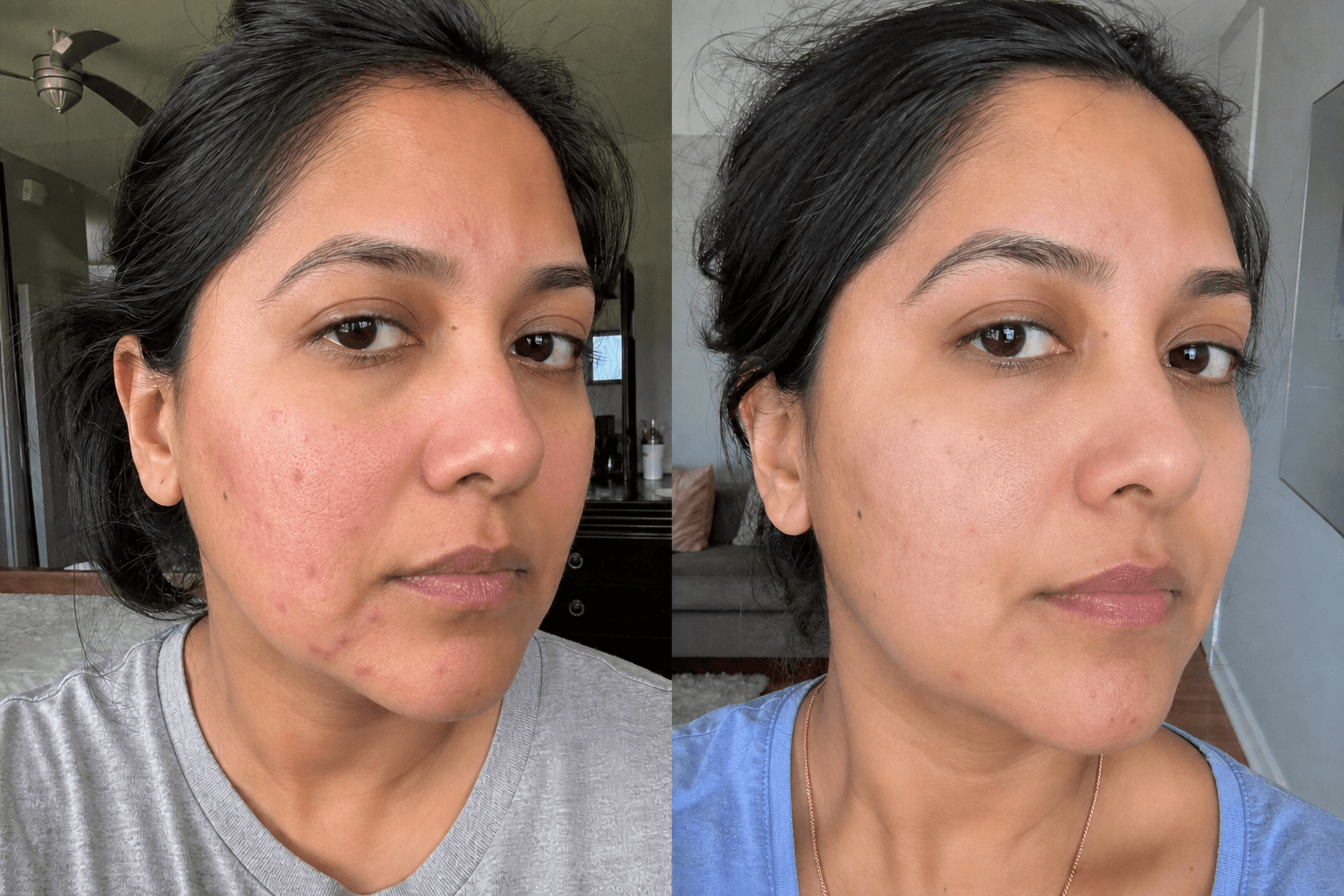
Is this for rosacea or acne?
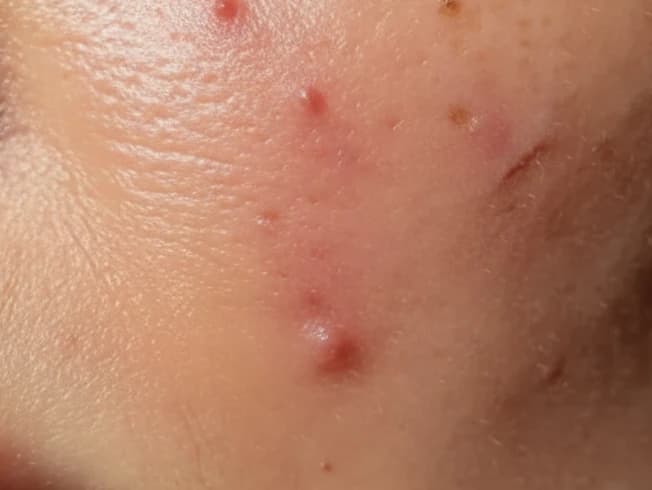
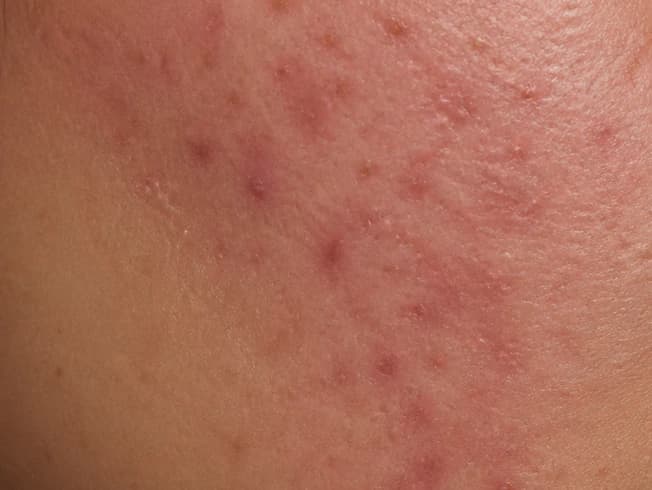
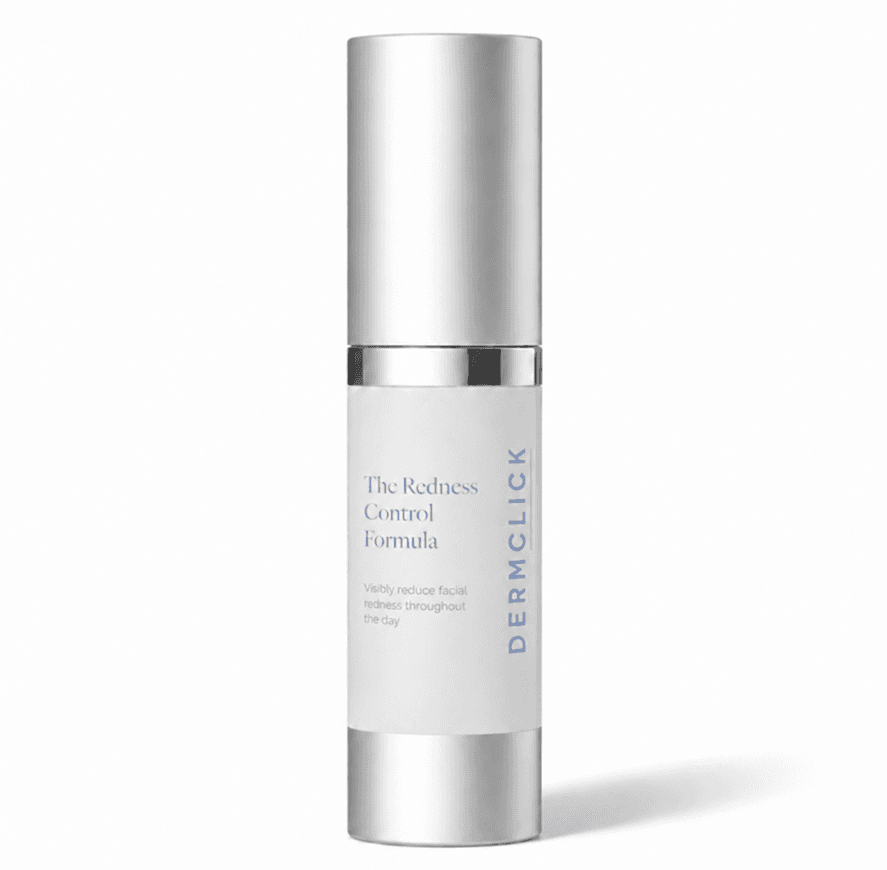
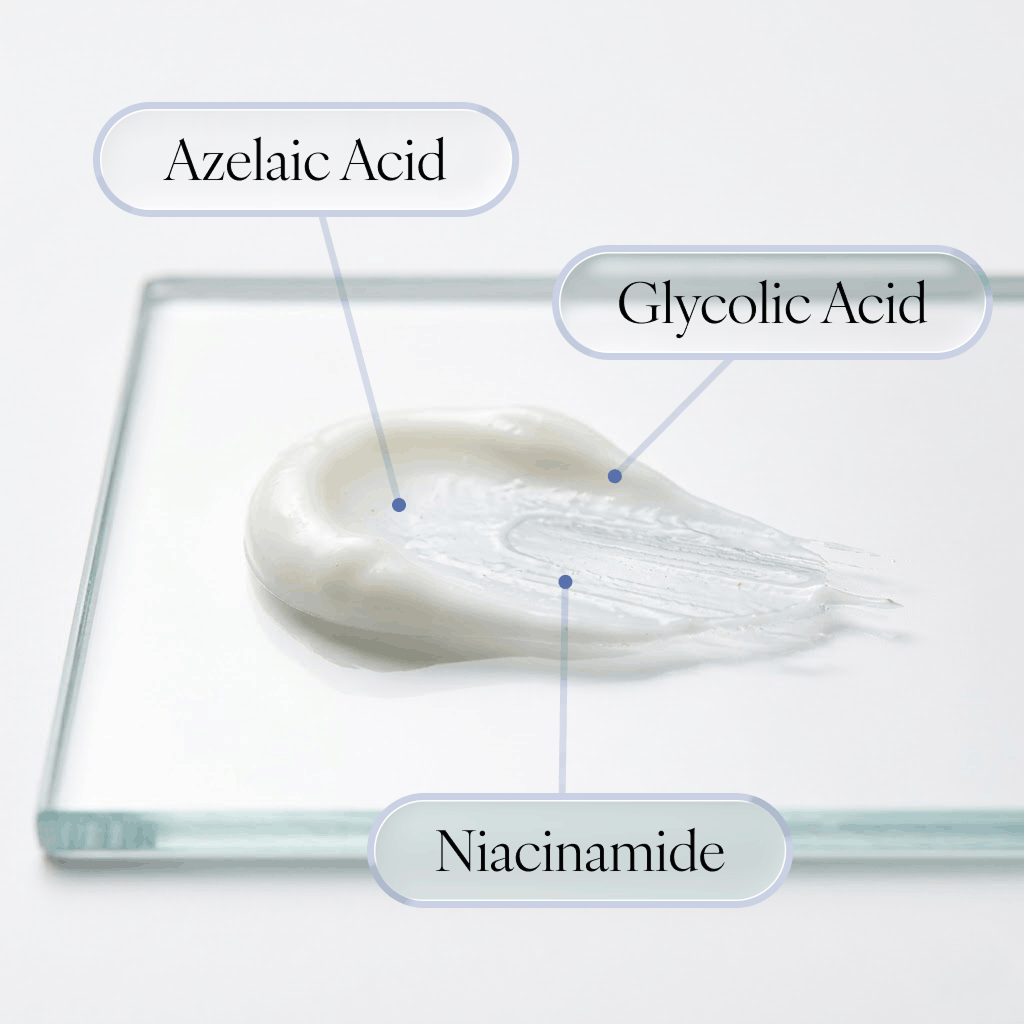
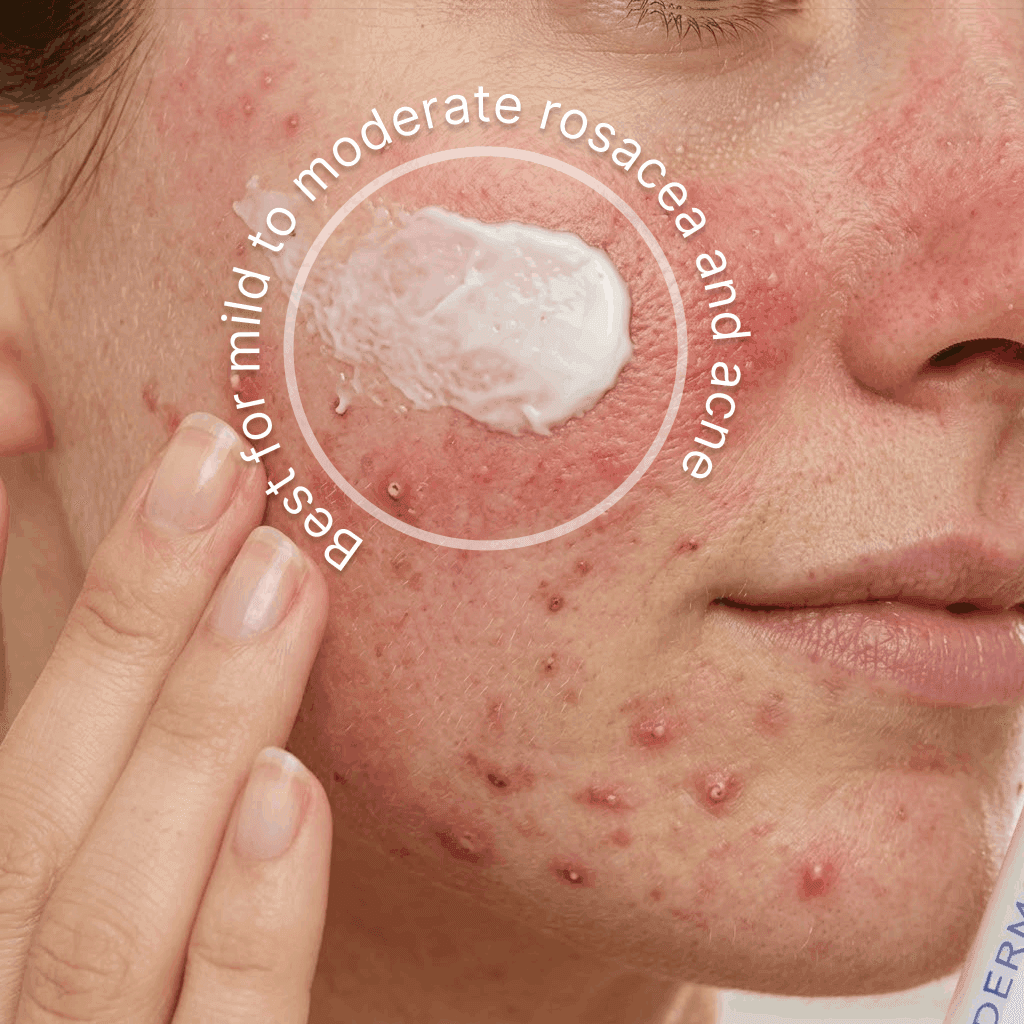
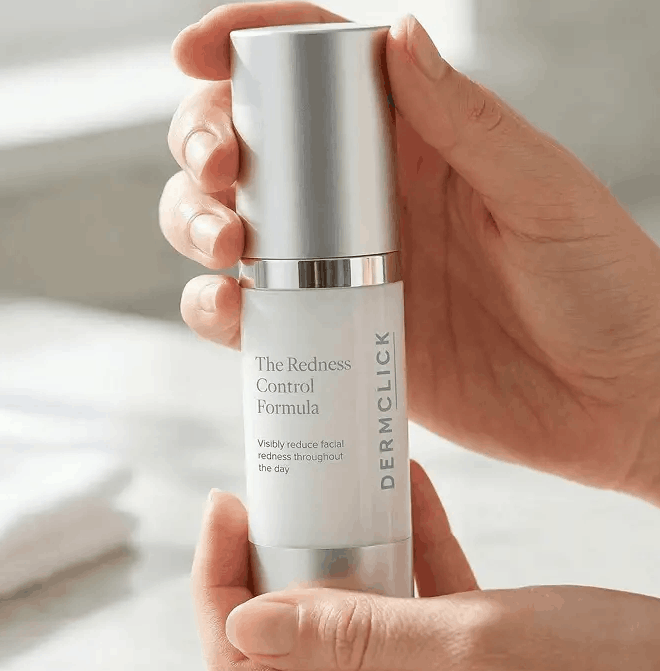
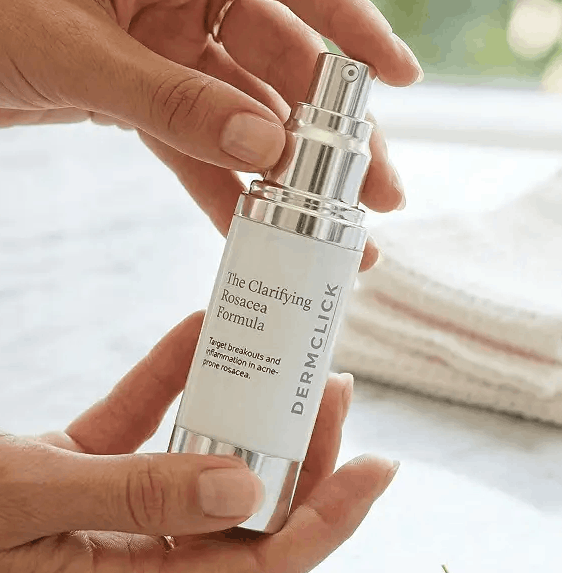
Both — specifically, the overlap. Azelaic acid is one of the few prescription actives commonly used for redness-prone skin with acne-like papules at the same time. If your skin is mostly red and flushing without breakouts, The Redness Control Formulaᴿˣ may be a better fit. If it's mostly acne without a rosacea component, The Acne Solutionᴿˣ may be cleaner. Take the assessment and a board-certified dermatologist on your care team will route you to the right one.
Is this really pregnancy-safe?
Azelaic acid is one of the few prescription rosacea and acne actives considered safe during pregnancy and nursing — it's commonly prescribed during pregnancy when retinoids, benzoyl peroxide, and most other prescription treatments are off the table. That said, every pregnancy is different, and a board-certified dermatologist on your care team will confirm appropriateness based on your specific situation during the assessment.
Will this work if I have severe rosacea?
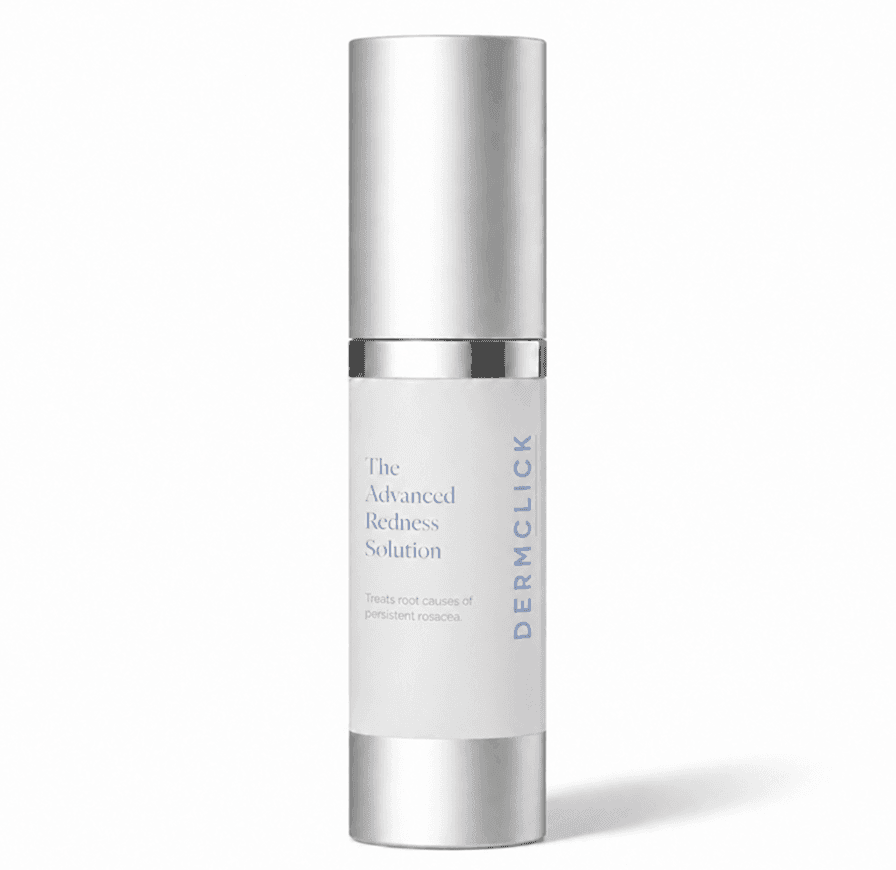
If your rosacea is mild to moderate — ongoing redness, flushing, and acne-like papules, but not frequent severe flare-ups — this is built for you. If your rosacea is persistent, severe, or hasn't responded to standard treatment, a board-certified dermatologist on your care team may route you to The Advanced Redness Solutionᴿˣ, which uses ivermectin, metronidazole, and azelaic acid together for stronger control. Your assessment determines which tier fits.
Can I use this with my current skincare routine?
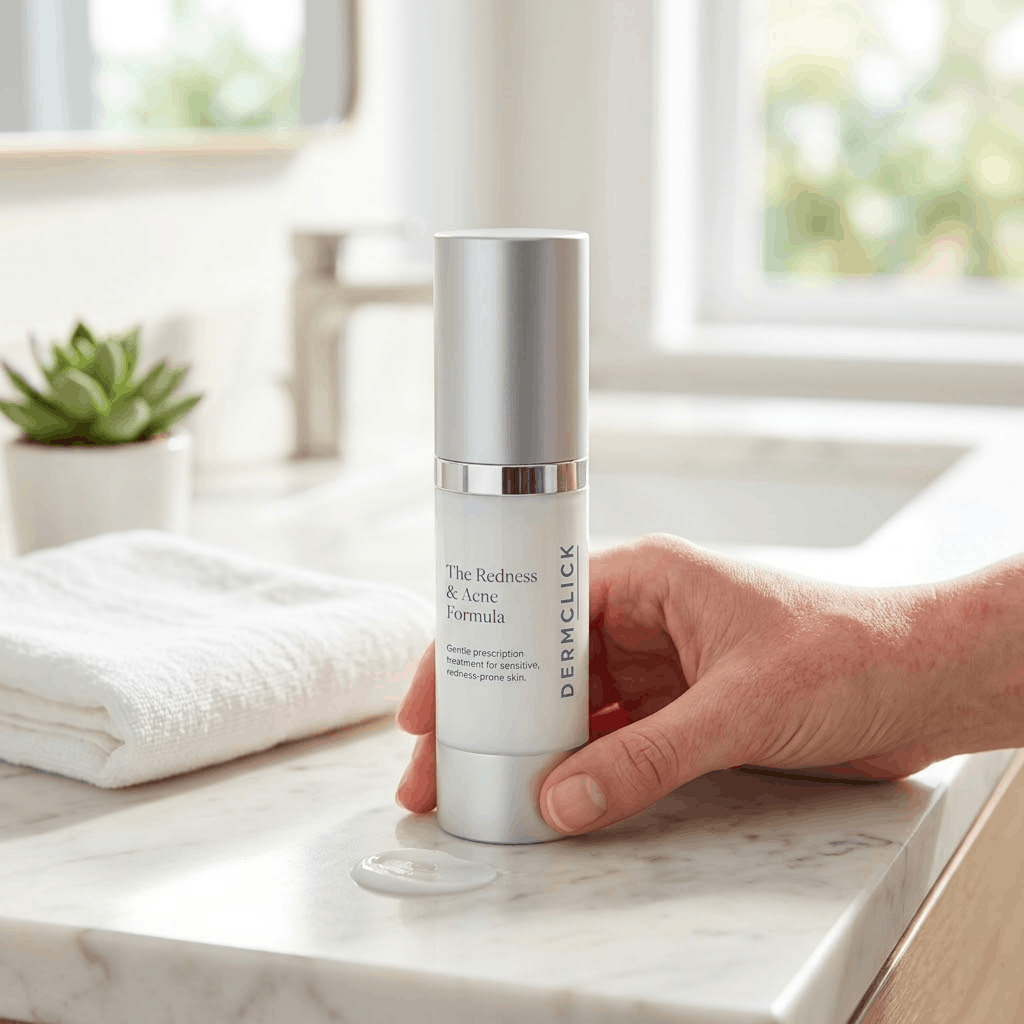
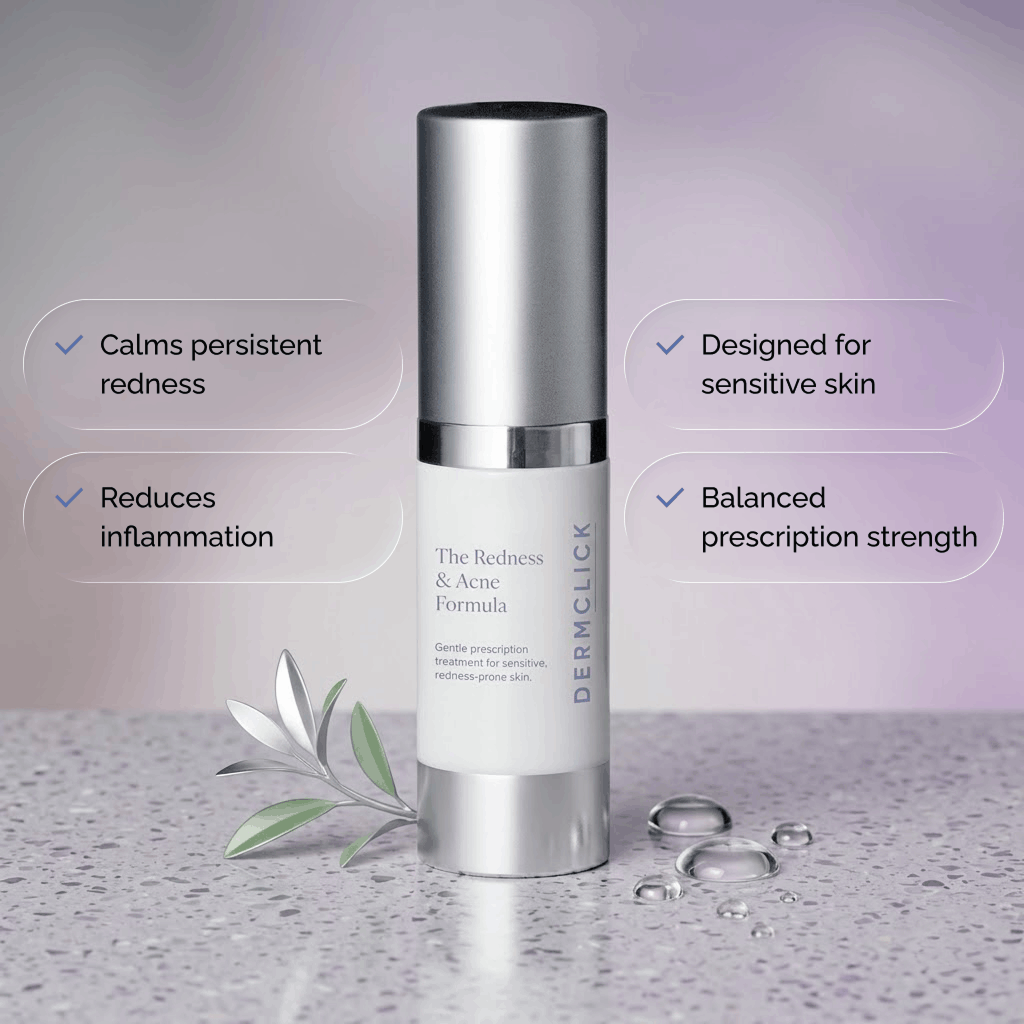
Most of your routine can stay. Gentle cleansers, fragrance-free moisturizers, and broad-spectrum SPF all pair well with The Redness & Acne Formulaᴿˣ. What you should pause: topical retinoids, additional acids at high concentrations, benzoyl peroxide, and any product that's been flaring your skin. A board-certified dermatologist on your care team will review your current products during your assessment and tell you exactly what to keep, drop, and add.
When will I see results?
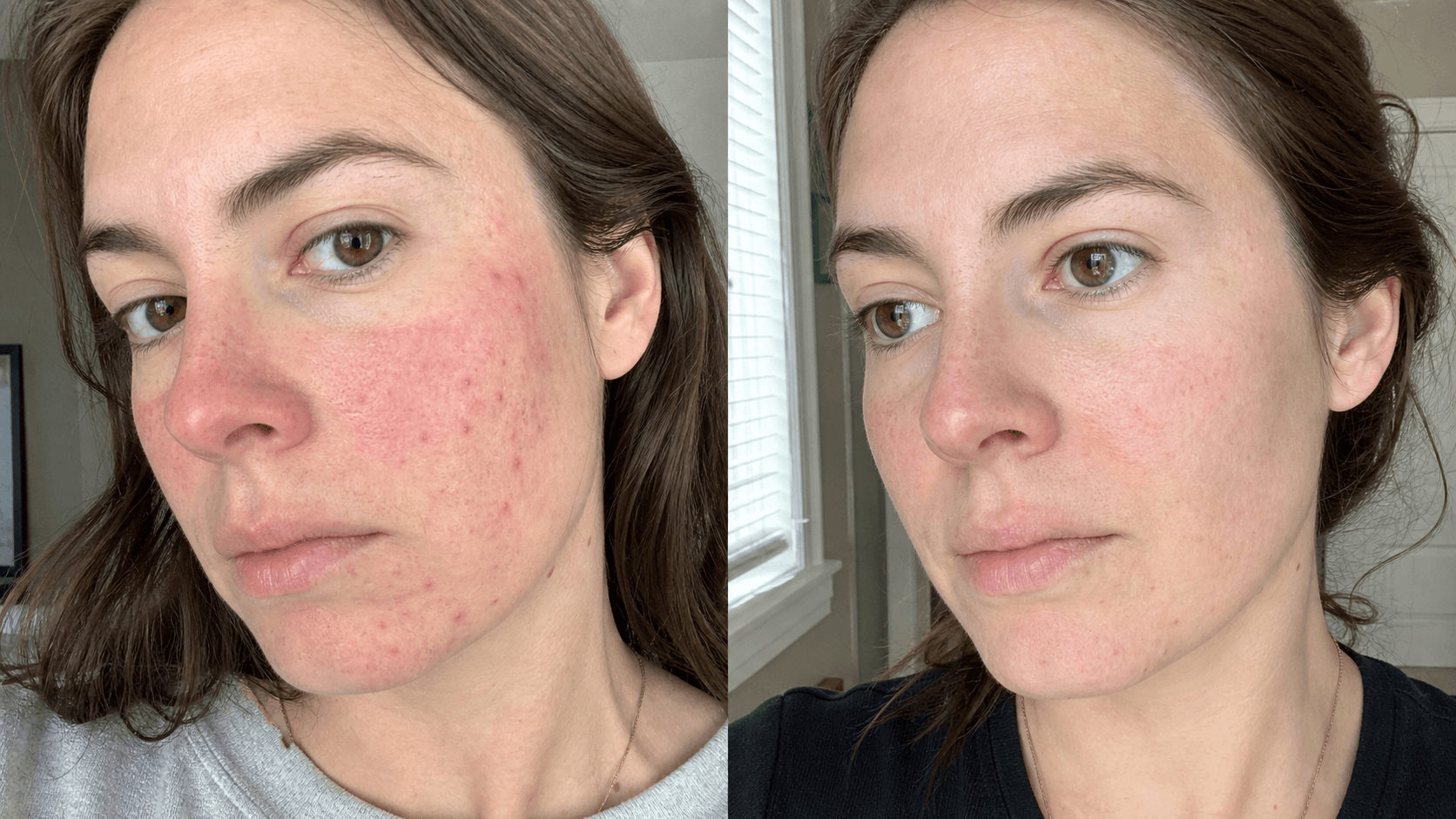
Most people start noticing a real shift between weeks 4 and 8 with consistent daily use. Weeks 1–2 are the adjustment period. Weeks 3–6, the acne-like papules slow down and the redness softens. Weeks 6–12, persistent redness looks meaningfully reduced and flares are less frequent. Rosacea treatment is steady, not dramatic — and consistency is what holds the results.
What triggers should I avoid?
Rosacea triggers vary by person, but the common ones are: sun exposure, heat (hot showers, hot drinks, saunas), spicy food, alcohol (especially red wine), stress, and certain skincare ingredients (fragrance, alcohol-based toners, harsh exfoliants). A board-certified dermatologist on your care team can help you identify your specific triggers and build a routine around them. The medication does the medical work — trigger avoidance amplifies it.